WATER STORAGE
Portable Water Filters for Emergencies: What They Do and Don't Do
A portable water filter is a backup for when your stored water runs out, but filters vary a lot in what they remove. Here's how filters compare with boiling and bleach, and what to read on the label.
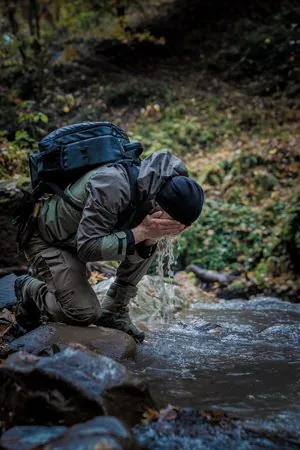
Photo: Saleh Bakhshiyev / Pexels. Illustrative.
A portable water filter is a backup for when your stored water runs out. It doesn't replace a two-week water supply, and not every filter removes every kind of germ. Ready.gov calls boiling the safest way to treat water, so a filter works best alongside a way to boil or disinfect.
How filters fit with other methods
Ready.gov compares three treatment methods:
- Boiling kills microbes but doesn't remove heavy metals, salts or most chemicals.
- Chlorination with plain household bleach also kills microbes but doesn't remove other contaminants.
- Distillation kills microbes and removes heavy metals, salts and most other chemicals.
Before treating, Ready.gov suggests letting particles settle or straining water through coffee filters or clean cloth.
What to look for on a filter
The CDC says boiling is the best way to kill germs, and the next best option is to filter water and then disinfect it. It also says most portable water filters remove parasites but not viruses or all bacteria. Here's what the label tells you, according to the CDC:
- Absolute pore size of 1 micron or smaller, or certified to NSF standard 53 or 58 for cyst reduction: removes parasites, but not viruses or all bacteria.
- Absolute pore size of 0.3 micron or smaller: removes bacteria and parasites, but not viruses.
- Reverse osmosis: removes parasites, bacteria and viruses.
The CDC also notes that bleach kills bacteria and viruses but doesn't work well on parasites, which is why filtering first and then disinfecting covers more ground.
Some links on this site are affiliate links. If you buy through them we may earn a commission at no extra cost to you.
Related articles:
LDS Preppers
ldspreppers.com